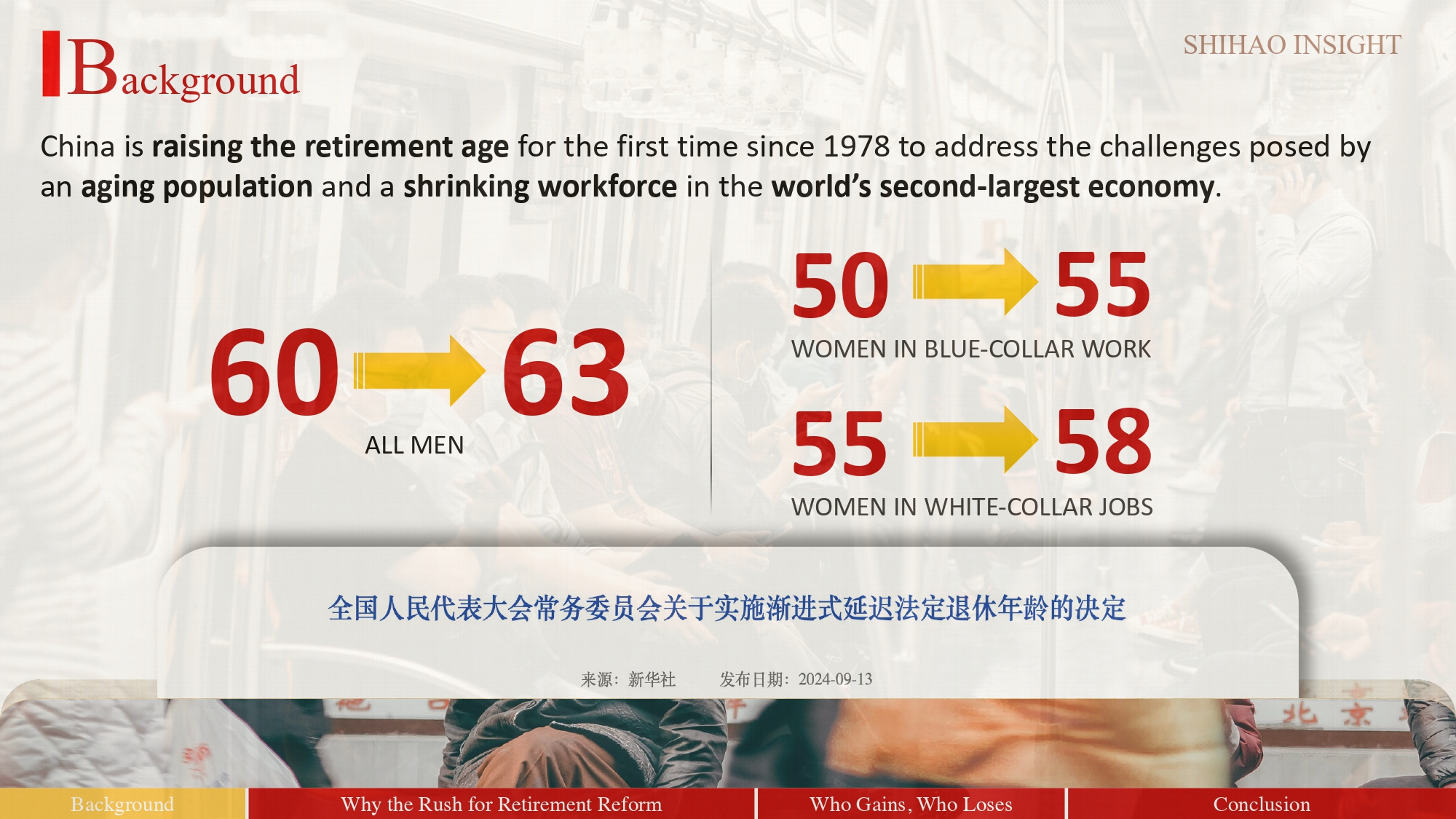
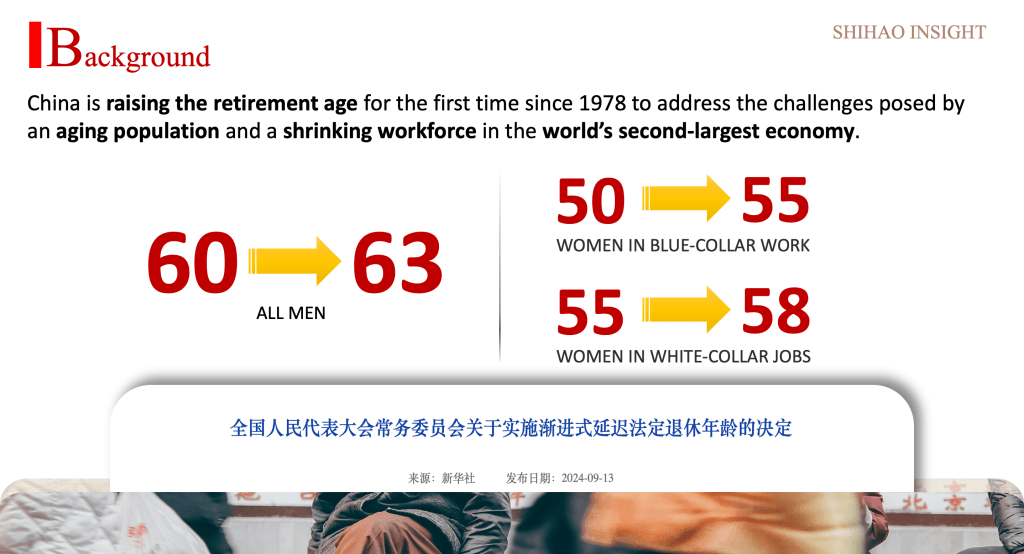
Current Retirement Age: China currently has one of the lowest official retirement ages in the world—60 years for men, 55 years for female civil servants, and 50 years for female workers.
China is raising the retirement age for the first time since 1978 to address the challenges posed by an aging population and a shrinking workforce in the world’s second-largest economy.
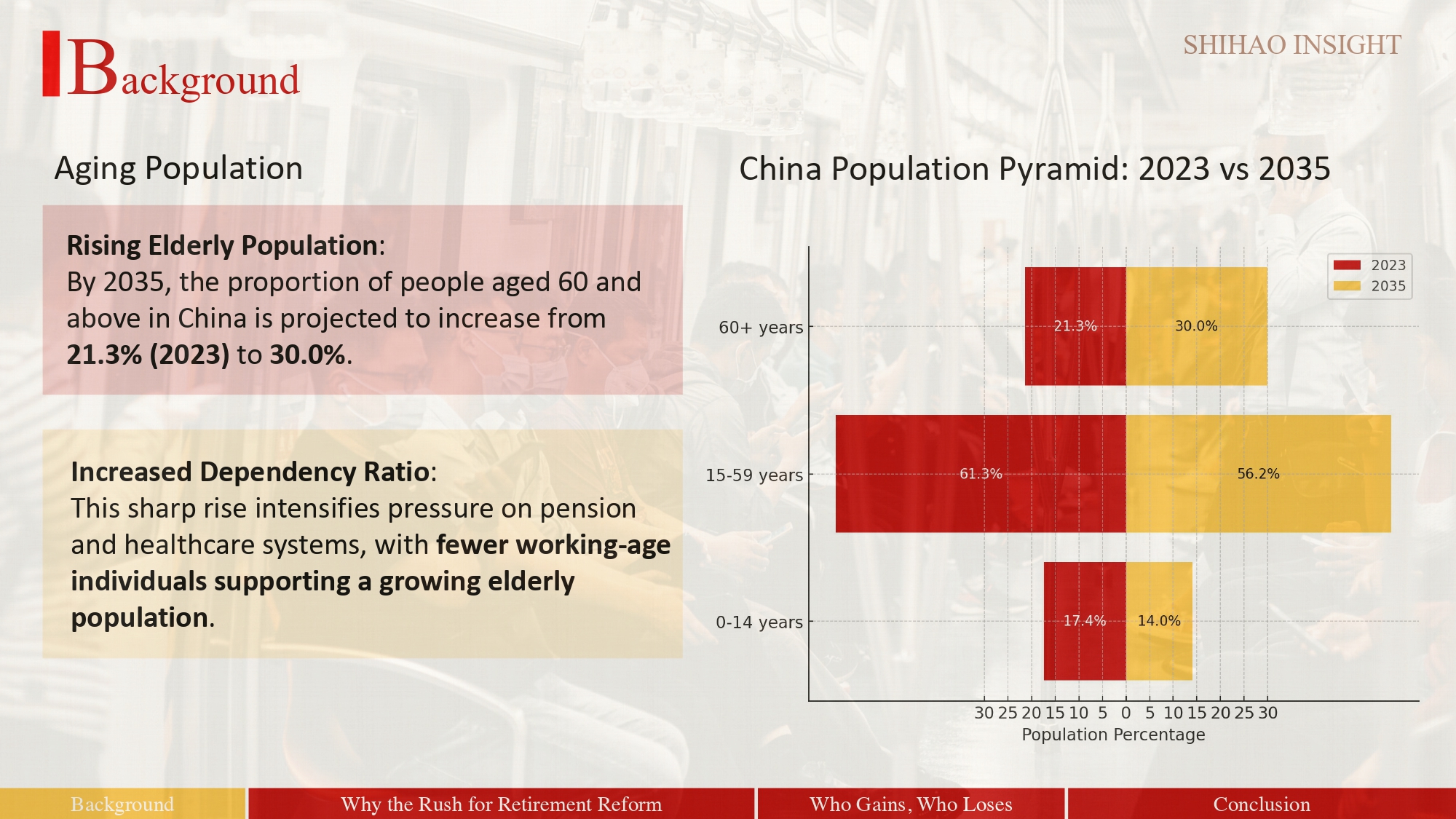
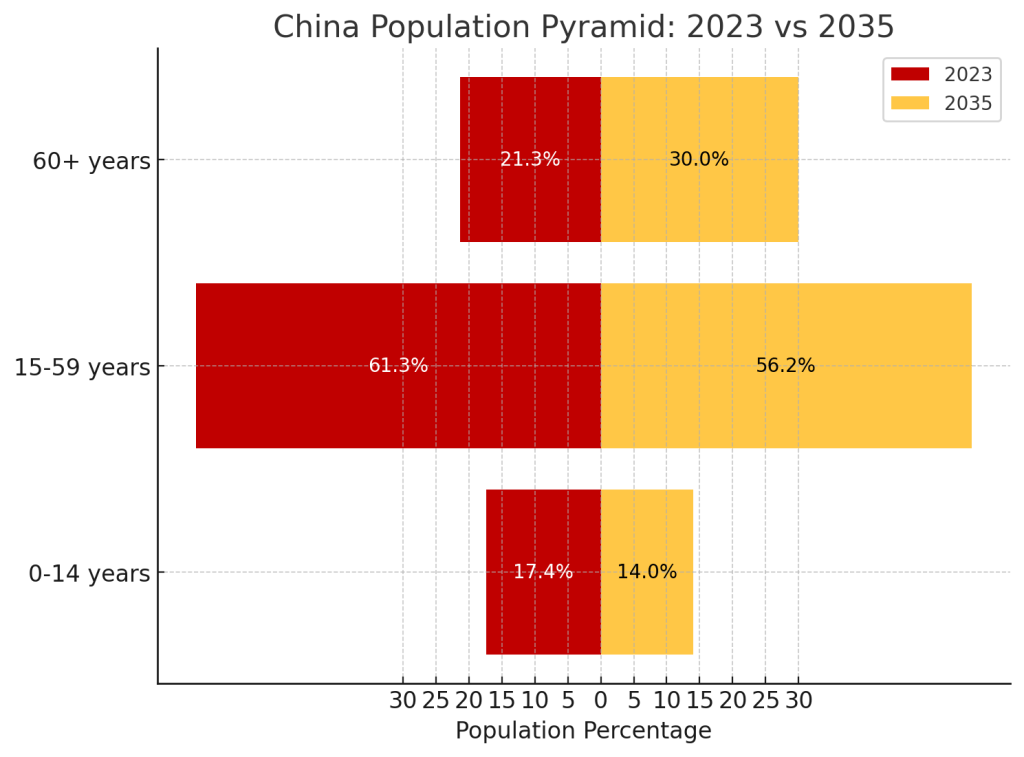
With a rapidly aging population, the proportion of people aged 60 and above is expected to increase from 21.3% in 2023 to 30.0% by 2035. This demographic shift places significant strain on the country’s pension and healthcare systems.
Interactive Chart: Swipe left or right to see changes
Aging Population: By the end of 2023, nearly 300 million people in China were aged 60 and older, accounting for around 19.8% of the total population. This number is expected to grow further, with projections suggesting that by 2035, around 400 million people will be over 60 years old.
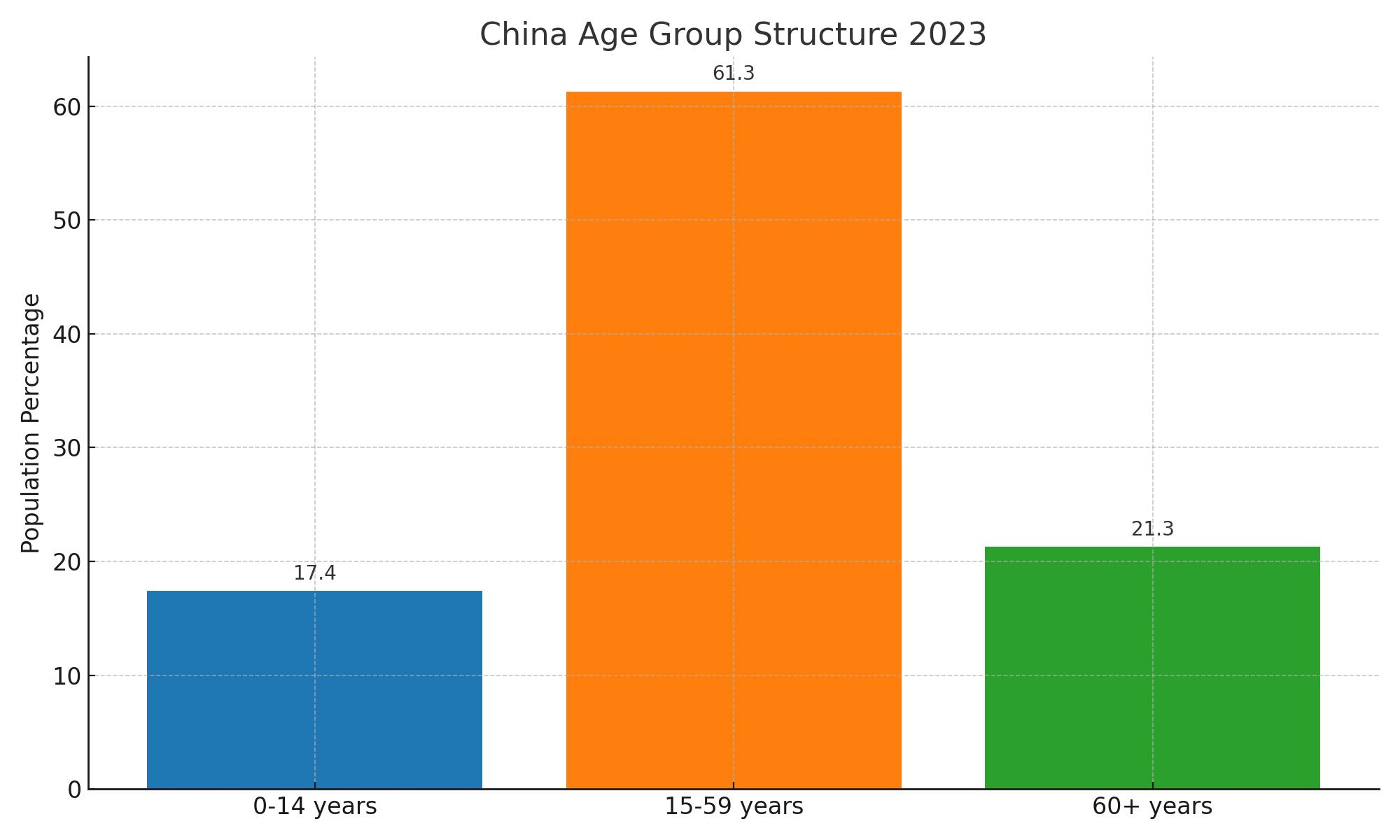
2023 Age Group Structure:
0-14 years: Approximately 17.4% of the population
15-59 years: Around 61.3% of the population
60+ years: About 21.3% of the population
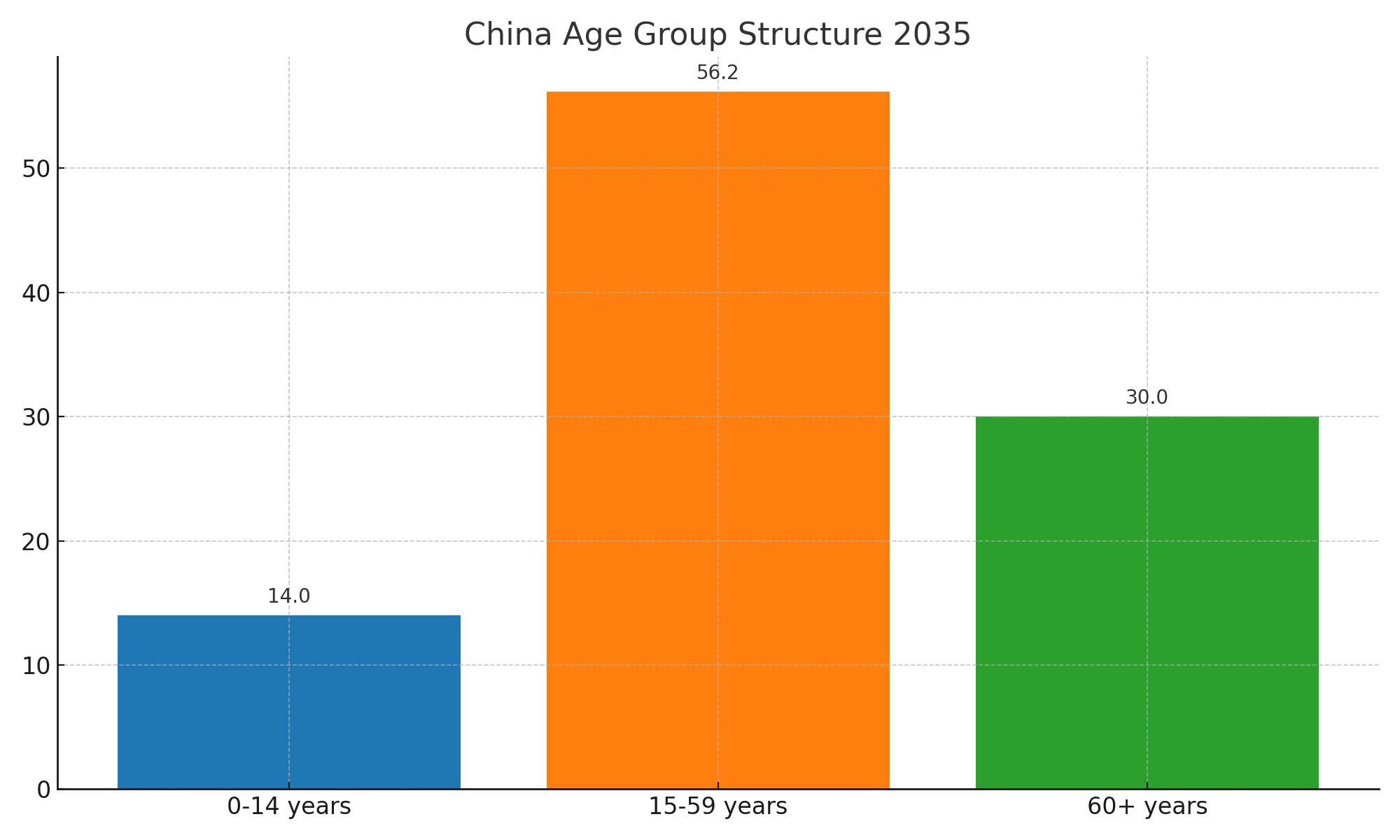
2035 Age Group Structure (Projections):
0-14 years: Projected to be 14.0% of the population
15-59 years: Expected to decrease to around 56.2%
60+ years: Projected to rise to 30.0% of the population
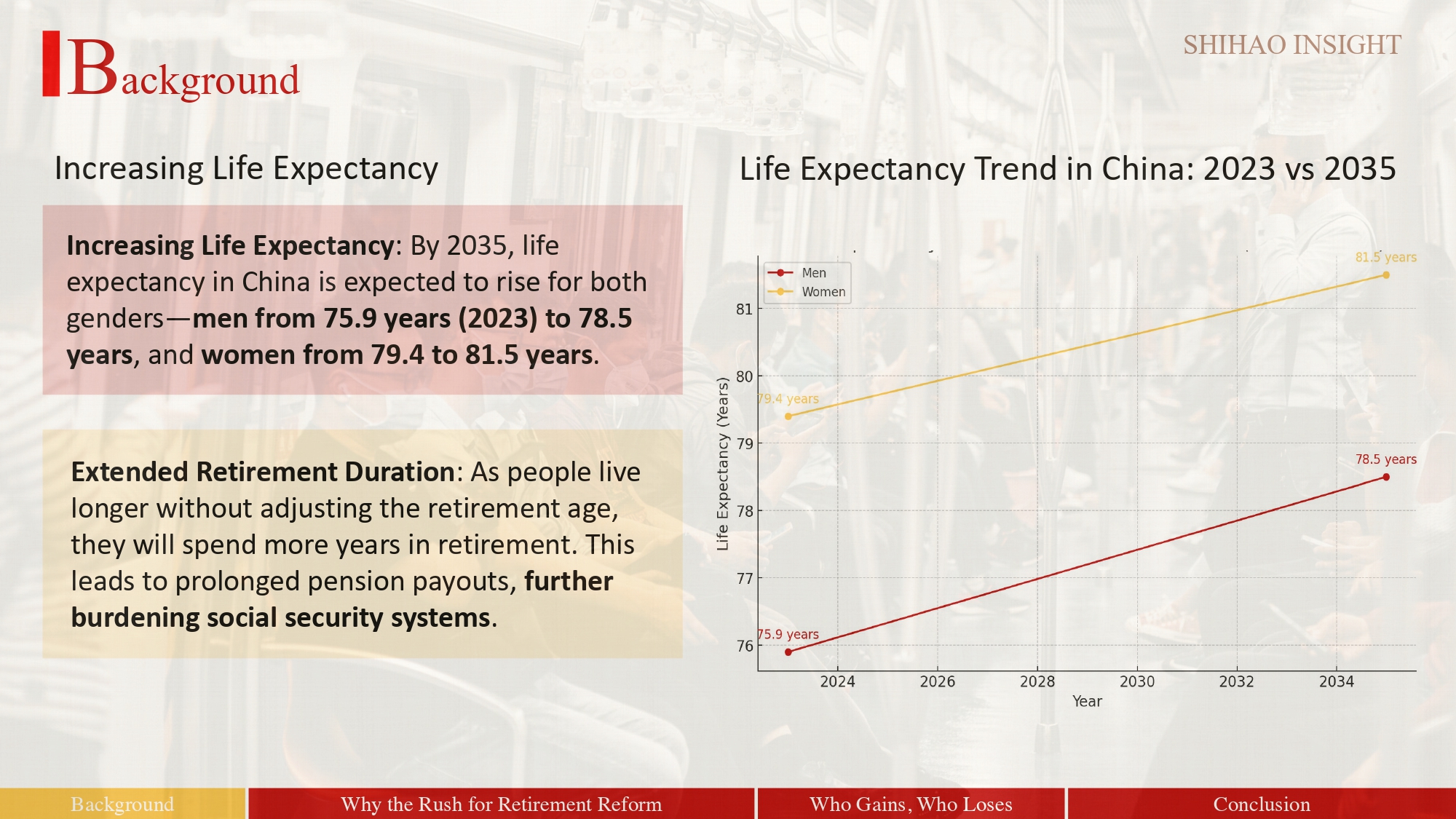
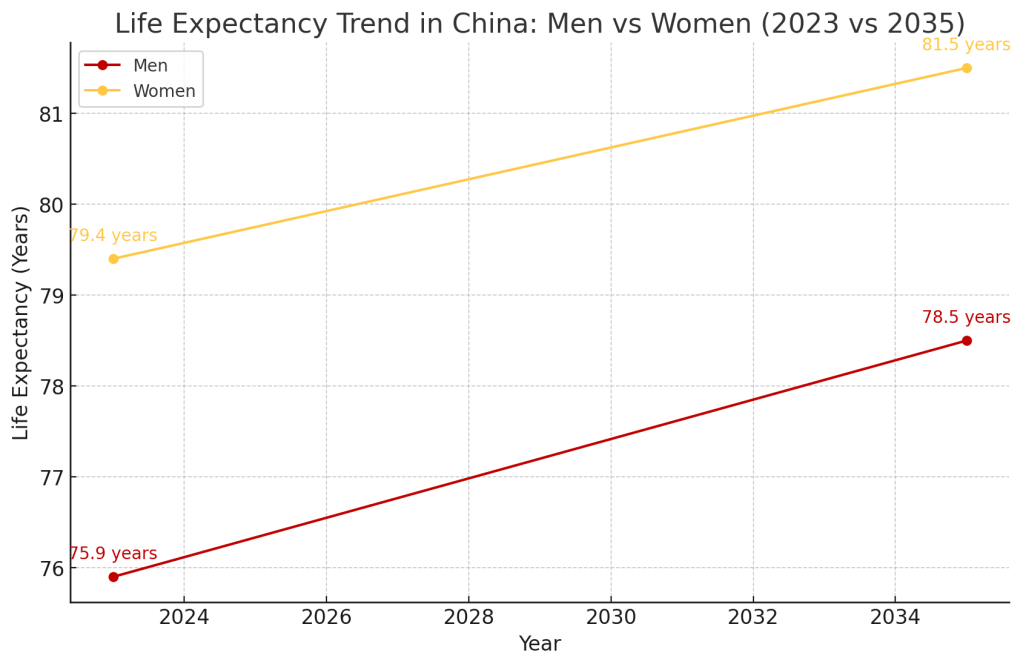
Life Expectancy: China’s life expectancy has been steadily increasing, reaching 77.64 years in 2024, and is projected to continue rising, potentially exceeding 80 years by 2050. This rising life expectancy adds pressure on the social security system as more individuals live longer, requiring more prolonged financial and medical support.
These demographic shifts are driving the government to reform its retirement policies to cope with the increasing strain on pension systems and the shrinking workforce.
Why is the Government in a Hurry to Launch the Policy?
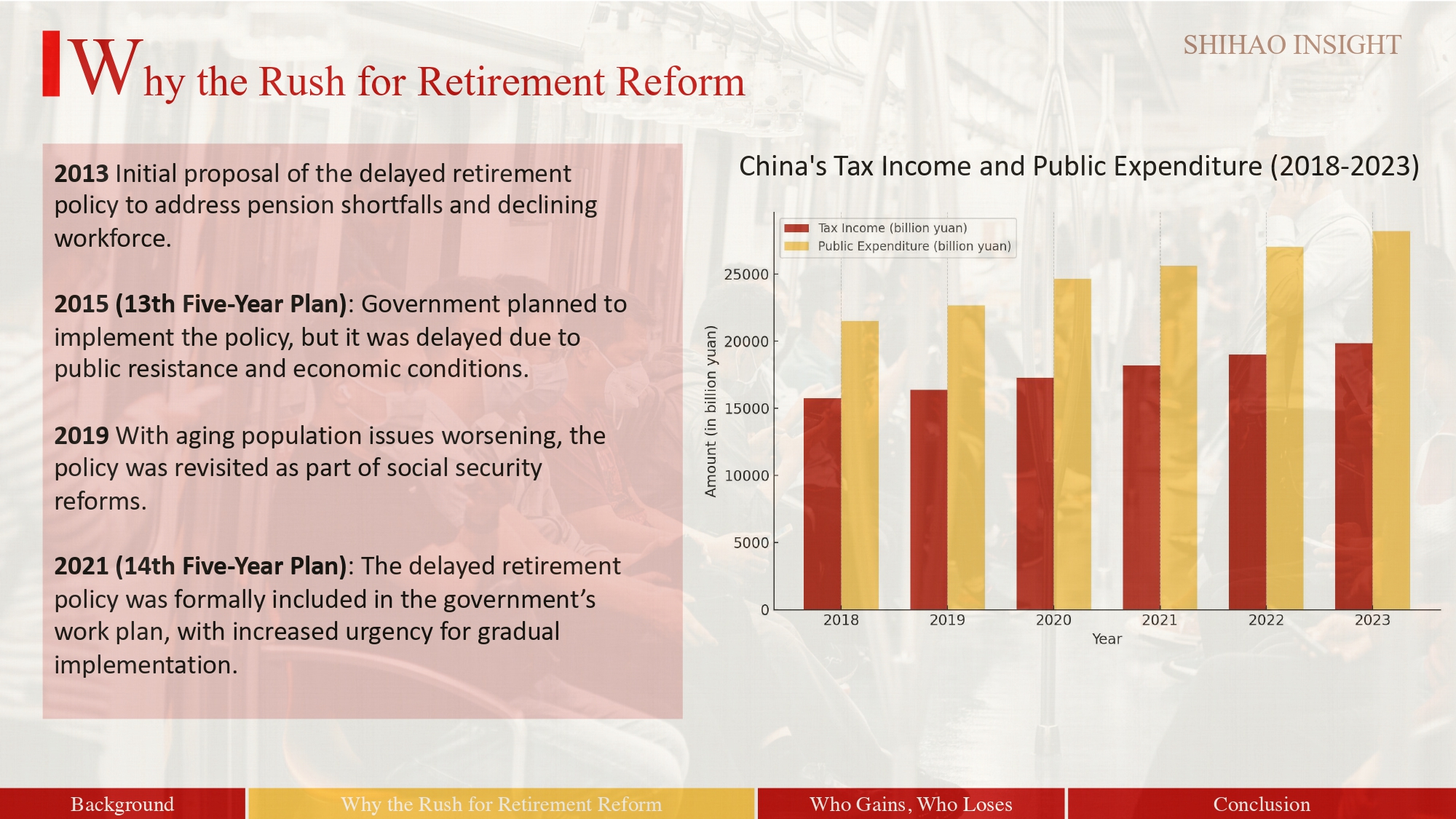
The Chinese government first introduced the concept of delaying the retirement age as early as 2013. At that time, discussions around postponing retirement gained momentum amid increasing demographic pressures from an aging population and mounting strains on the country’s pension fund system.
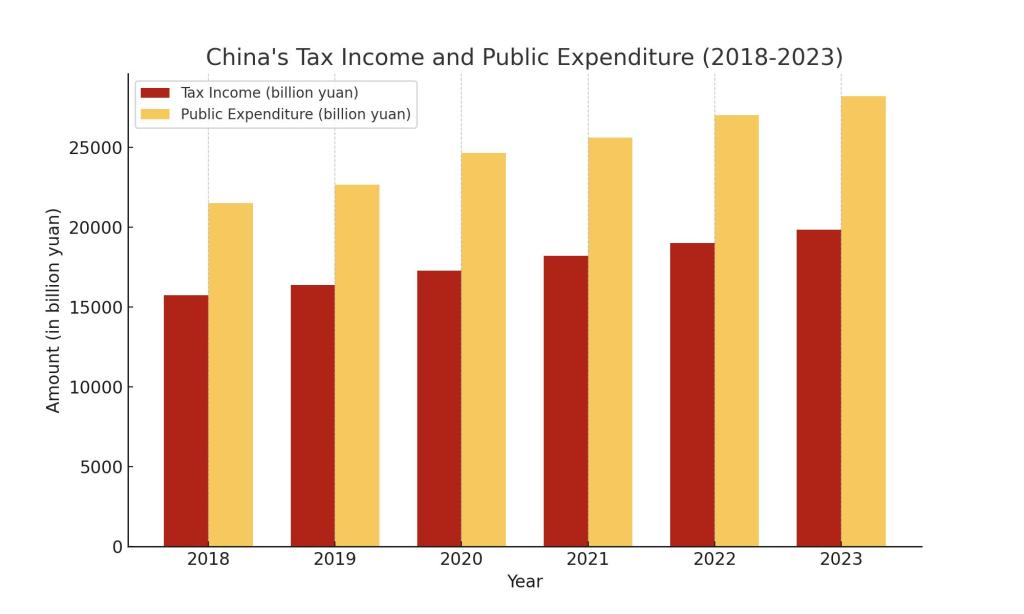
Public Cost Growing Faster Than Tax Income:
Public Cost Growth: China’s public expenditure has steadily increased from 22.3 trillion yuan in 2019 to 24 trillion yuan in 2023. This reflects the rising financial demands from areas such as healthcare, pensions, social services, and other public welfare programs, especially as the population ages.
Slower Tax Income Growth: In contrast, the tax revenue has remained relatively stable, fluctuating slightly between 17.3 trillion yuan and 17.9 trillion yuan from 2019 to 2023. This shows a slower rate of growth compared to the rising costs.
This imbalance between rising public expenditure and slower-growing tax revenue puts increasing pressure on the government’s finances. If the gap between revenue and costs continues to widen, the government could face serious budget deficits.
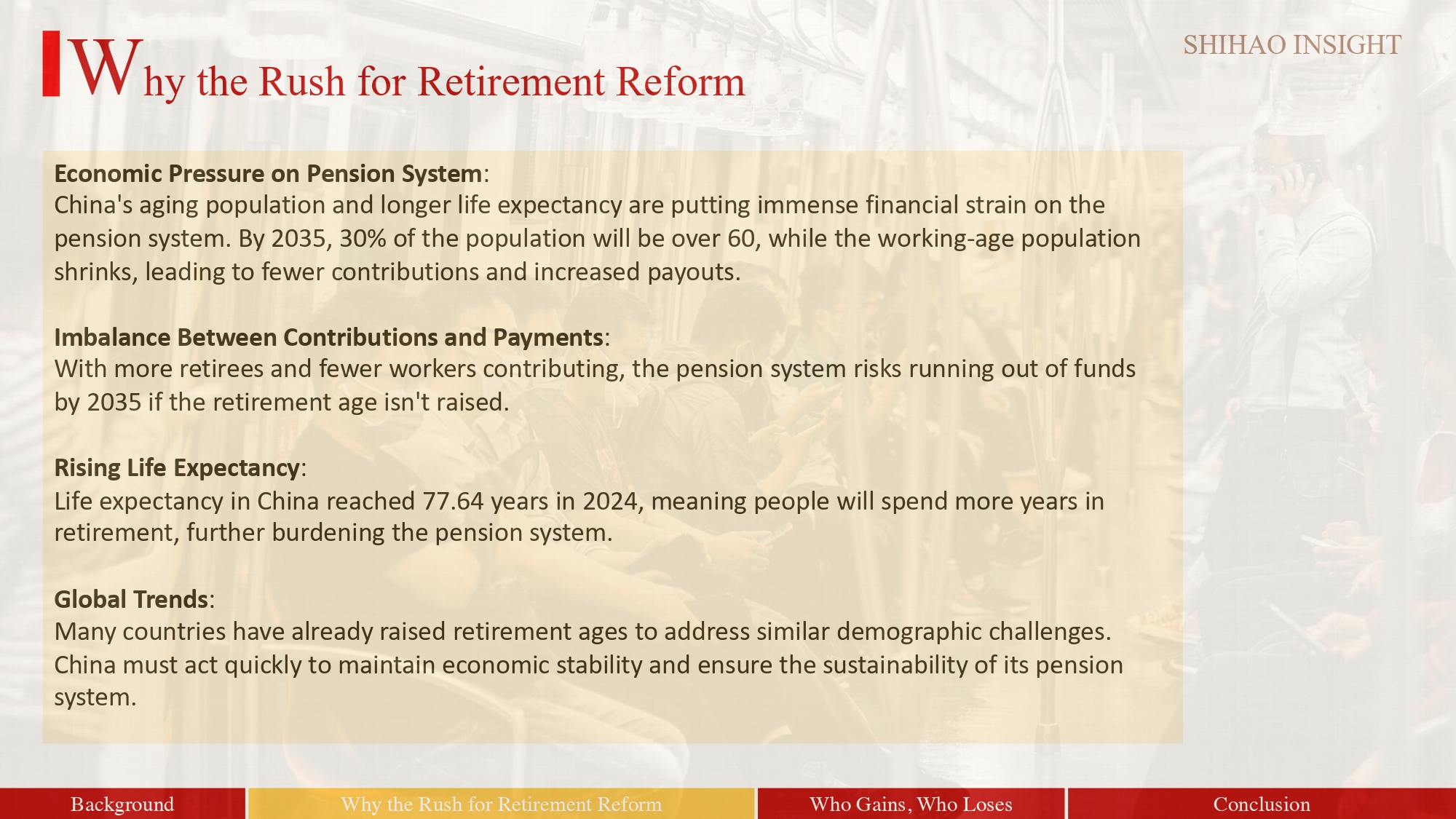
Economic Pressure on Pension System: Increased life expectancy means individuals spend more years in retirement, leading to prolonged pension payouts. Without adjusting the retirement age, the social security system faces sustainability challenges due to the higher dependency ratio.
China’s public pension system is under immense financial pressure due to the rapidly aging population and shrinking workforce. The pension system primarily relies on contributions from the working population, but the percentage of people in the workforce is steadily decreasing. In 2023, 61.3% of the population was of working age (15-59), but this is projected to drop to 56.2% by 2035. At the same time, the proportion of people aged 60 and older is expected to rise from 21.3% in 2023 to 30% by 2035.
This imbalance between contributors and recipients is creating a significant financial strain on the pension system.
Imbalance Between Contributions and Payments: As more retirees draw from the pension fund and fewer workers contribute, the system faces increasing financial pressure. If no changes are made, projections suggest that the pension fund could run out of money by 2035.
Rising Life Expectancy: Life expectancy in China has increased significantly, reaching 77.64 years in 2024. With people living longer, retirees require pension support for a longer period, further straining the system.
Global Trends: Many other countries facing similar aging challenges have already raised retirement ages to alleviate pressure on their pension systems. China must follow this trend to ensure economic stability and maintain the viability of its pension system.
Impact on Different Age Groups: Who Gains, Who Loses?
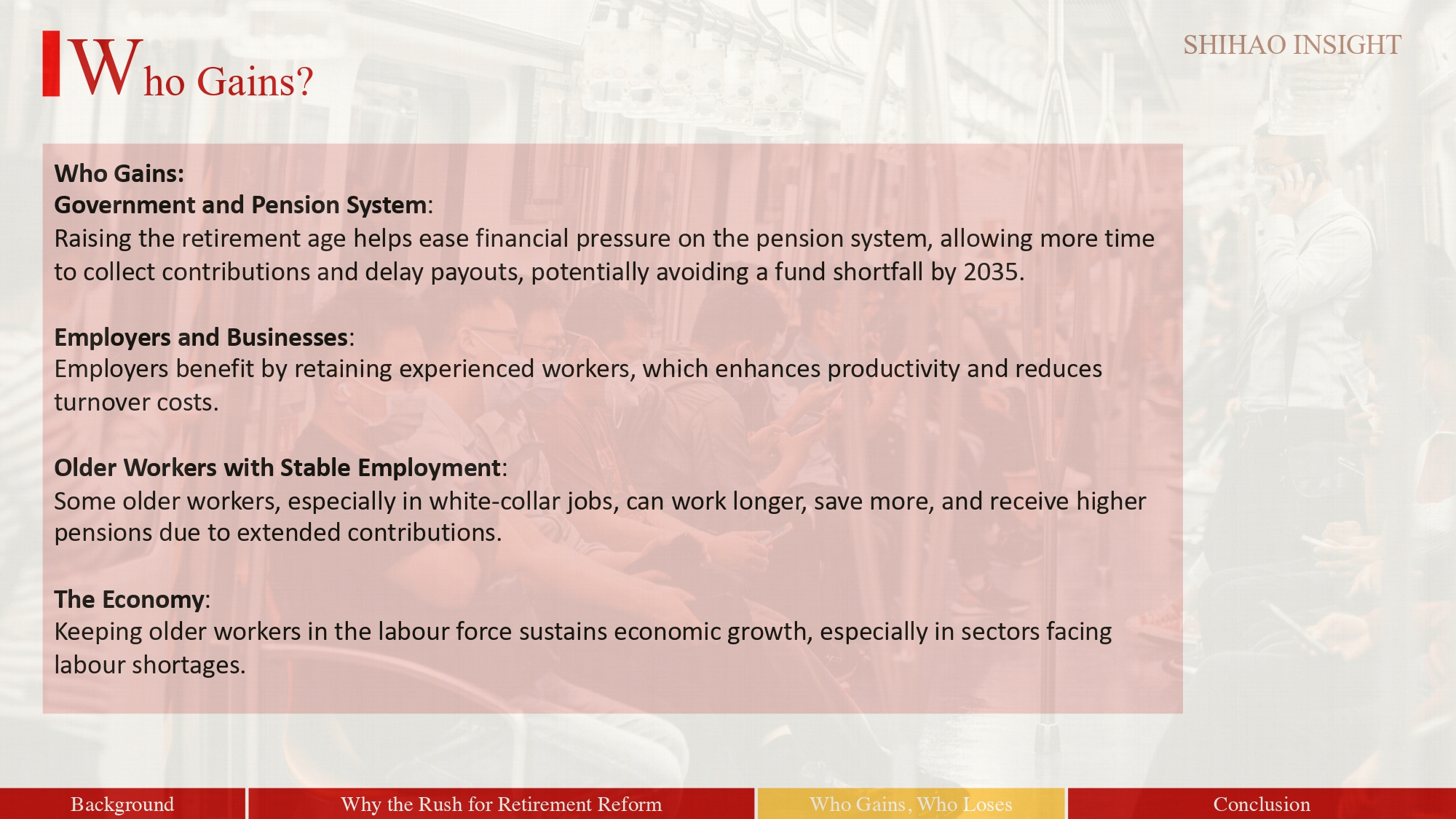
Who Gains:
The Government and Pension System:
By raising the retirement age, the government can alleviate the financial pressure on the pension system. With fewer people retiring early, the pension fund will have more time to collect contributions and delay payouts, potentially avoiding the projected shortfall by 2035. This reform helps to maintain the long-term sustainability of the pension system.
Employers and Businesses:
Employers will benefit from retaining experienced workers in the labor force for longer. Older employees often bring valuable expertise and stability, which can enhance workplace productivity and reduce turnover costs.
Older Workers with Stable Employment:
Some older workers, especially those in white-collar jobs, may benefit from the opportunity to work longer and continue earning an income. This could allow them to save more for retirement and benefit from delayed pension payouts, which might be higher due to extended contributions.
The Economy:
Keeping older workers in the workforce helps sustain economic growth by maintaining a larger active labor pool. This is especially critical for industries facing labor shortages due to the shrinking younger population.
Who Loses:
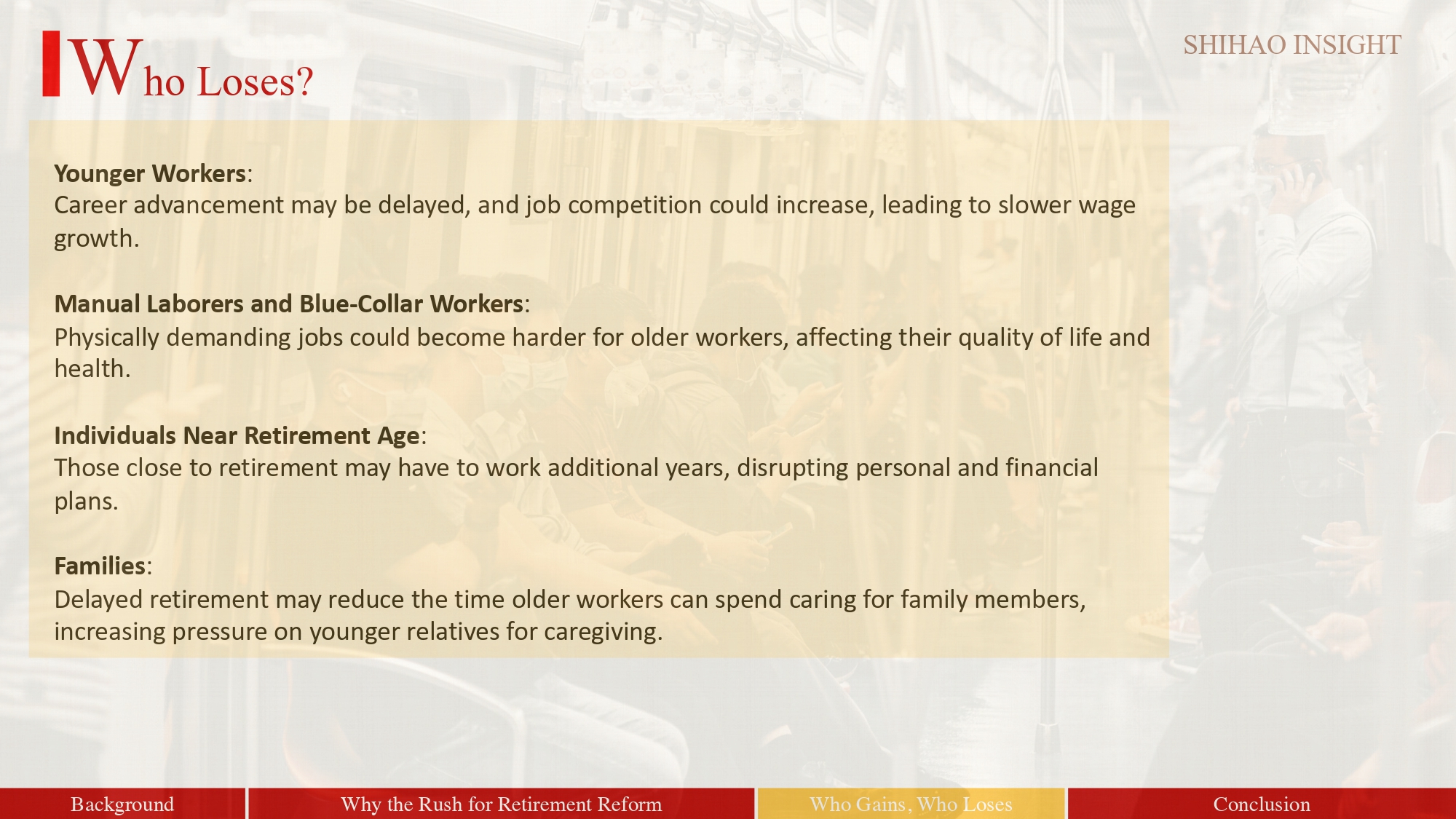
Younger Workers:
Younger workers may face delayed career advancement and fewer job openings as older employees stay in the workforce longer. This could lead to increased competition for jobs and slower wage growth for younger generations.
Manual Laborers and Blue-Collar Workers:
Workers in physically demanding jobs may struggle with the new retirement age, as their jobs are often more taxing on the body. Forcing them to work longer could lead to increased physical strain, lower quality of life, or earlier health issues. While white-collar workers may adapt more easily to working longer, those in blue-collar roles could be disproportionately affected.
Individuals Near Retirement Age:
Workers who were planning to retire soon might feel the negative impact of having their retirement delayed by the reform. For example, a worker in their late 50s or early 60s who expected to retire under the current age limit might now have to work additional years, which could disrupt personal and financial plans.
Families:
In a society where elderly care is often provided by families, delaying retirement could reduce the time older workers have to spend caring for their families, especially grandchildren. This could put additional pressure on younger family members who might need to balance work with caregiving responsibilities.
Conclusion
The Chinese government’s urgency to raise the retirement age is driven by the critical need to balance public costs and tax revenue. The current trajectory of rising pension obligations and public expenditure threatens the sustainability of the social security system. By delaying retirement, the government aims to reduce the financial strain on the pension system and ensure long-term economic stability. This reform is essential to prevent a fiscal shortfall by 2035 and to sustain the economic growth needed to support an aging society.


 Shihao Insight